Utility knife vs rotary cutter for leather
Both cost under twenty dollars and both cut leather — but they fail in opposite places. Here is which one belongs in your first order, and when you will want the other.
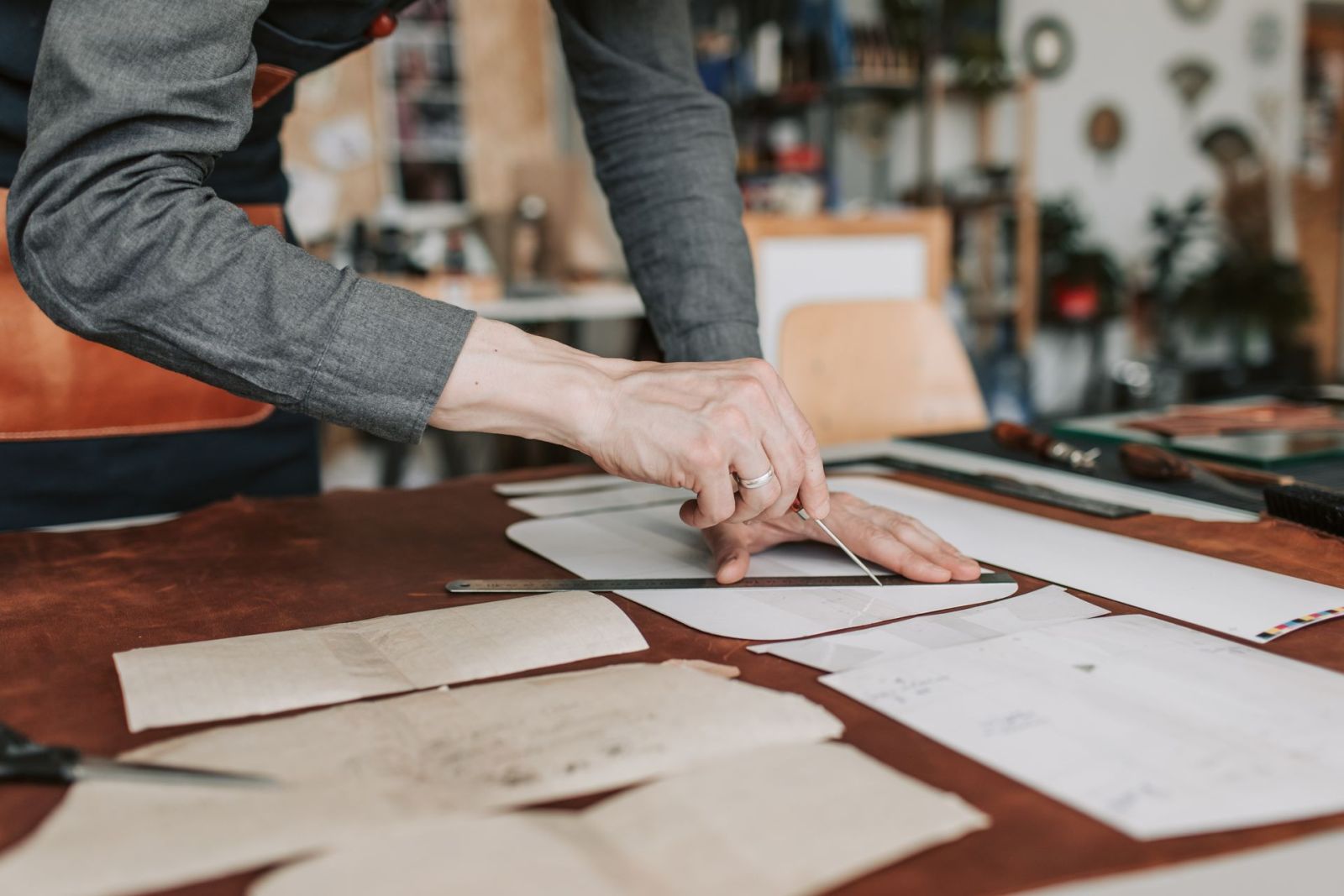
Quick answer
Buy the utility knife first: it cuts every weight from wallet linings to belt blanks, costs almost nothing, and a snapped-off segment is always factory sharp. Add a 45 mm rotary cutter when you work thin (1–4 oz), soft or stretchy leather, where its rolling action prevents the dragging and distortion a straight blade causes. Both want a steel ruler and a self-healing mat.
A blade pulled through leather does two jobs at once: it severs fibres and it drags the material toward you. On firm veg-tan the drag barely matters. On a soft chrome-tan garment hide, the drag stretches the leather as you cut and your straight line comes out banana-shaped. A rotary cutter’s wheel rolls instead of dragging — the fix for exactly that problem, and the reason quilters swear by the same tool.
Cutting setup matters as much as the cutter: our how to cut leather guide covers rulers, mats and technique.
Head to head
| Factor | Utility / snap-blade knife | Rotary cutter (45–60 mm) |
|---|---|---|
| Thick veg-tan (6 oz +) | Yes — multiple passes | Struggles; wheel stalls |
| Thin, soft leather (1–4 oz) | Drags and distorts | Excellent — no drag |
| Long straight cuts | Good against a ruler | Best in class |
| Tight curves | Good with practice | Poor — wide wheel |
| Inside corners | Yes | No |
| Blade cost | Pennies per snap segment | A few dollars per wheel |
| Safety | Exposed tip; retractable | Guarded until pressed |
The case for the utility knife
The snap-blade utility knife is arguably the best value tool in the entire craft. Fresh edge on demand (snap a segment the moment it drags), enough spine stiffness for belt-weight leather in two or three passes, a fine enough tip to follow templates and start inside cuts. Its weaknesses are the drag on soft hides and the fact that a tired blade tempts you to push harder — the classic route to cut fingers. Snap early, snap often.
A step up in control (not cost) is a fixed-handle clicker knife with replaceable blades — see our beginner knife guide.
The case for the rotary cutter
On thin and stretchy leathers the rotary cutter is not a preference, it is the difference between usable and ruined panels. The wheel presses down while it slices, so the leather never shifts; long ruler-guided cuts come out dead straight; and garment hides, linings and chrome-tan bag panels cut like paper. Typical wheels are 45 mm (agile) and 60 mm (better in thicker material). The limits: it cannot do inside corners, hates tight curves, and stalls in thick veg-tan.
The verdict
Utility knife first, rotary second. The knife covers 90% of beginner cutting on firm veg-tan. The moment your projects include soft or thin leather — linings, garment hide, chrome-tan totes — a 45 mm rotary earns its spot in the drawer. Makers who do both keep both within reach and stop thinking about it. Neither replaces a proper round knife later, but neither embarrasses you next to one either.
Cutting gear that pairs with either choice
Blades, mat and ruler — the three-piece foundation of clean cutting.
-
Utility / Snap-Blade Knife
- Size
- retractable blade
- Blade
- replaceable blade
- Level
- Beginner
The cheapest reliable way to cut leather: snap to a fresh edge whenever it drags. Fine for straight lines against a steel ruler.
-
Clicker / Craft Knife (interchangeable blades)
- Size
- fixed handle, swap blades
- Blade
- replaceable blade
- Level
- Beginner
A rigid handle with replaceable blades gives more control than a snap knife for curves and corners without sharpening skills.
-
Japanese Craft Knife (kiridashi)
- Size
- single-bevel
- Blade
- high-carbon steel
- Level
- Intermediate
A single-bevel marking and cutting knife that also skives. Sharpens easily; a great bridge toward a round knife.
-
Self-Healing Cutting Mat (18x24 in)
- Size
- 18x24 in | 1 in grid
- Level
- Beginner
For knife and rotary cuts only — never punch on it. The printed grid squares up straps and panels fast.
Reviewed 2026-07-20 -
Cork-Backed Steel Ruler (24 in)
- Size
- 24 in stainless
- Level
- Beginner
The cork keeps it from skating on smooth leather and lifts the edge away from the blade. Buy longer than you think you need.
Reviewed 2026-07-20 -
Poundo / Poly Punching Board
- Size
- 12x12 in
- Level
- Beginner
The surface to punch and chisel into: firm enough for clean holes, soft enough to spare your cutting edges. Pair it with the mat, don't replace it.
Reviewed 2026-07-20 -
Rotary Cutter (45 mm)
- Size
- 45 mm wheel
- Weight
- 1-4 oz
- Blade
- replaceable blade
- Level
- Beginner
Rolls instead of drags, so thin and stretchy leathers stay put. Superb for long straight cuts against a steel ruler.
Reviewed 2026-07-20
Key takeaways
- Utility knife first: cuts every weight, blades cost pennies.
- Rotary cutter wins on thin, soft, stretchy leather — zero drag.
- Neither does tight curves well; that is knife-and-practice territory.
- Ruler + mat matter as much as the cutter.
Keep building your bench skills: the next stop in this series is best leather round knife (and head knife), and the step before it was how to cut leather cleanly (knives, mats, rulers).
Frequently asked questions
Can a rotary cutter cut thick leather?
Up to roughly 5–6 oz with a fresh 60 mm wheel and firm pressure, but it stalls and skids beyond that. Thick veg-tan is utility-knife (or round-knife) territory, cut in two or three passes.
Why does my straight cut curve inward?
Blade drag pulling soft leather as you cut, or the blade flexing away from the ruler. Fixes: fresh blade, lighter passes, a cork-backed steel ruler with real finger pressure — or switch to a rotary cutter on soft hides.
Are quilting rotary cutters fine for leather?
Yes — a 45 mm quilting cutter is the same tool. Buy a few extra wheels; leather dulls them faster than cotton does.
What knife do professionals cut leather with?
Traditionally the round (head) knife, which cuts, skives and corners in one tool — but it demands sharpening skill and respect. Plenty of working makers still reach for a snap-blade for everyday straight cuts.
How do I cut leather without a cutting mat?
Reluctantly — on dense cardboard or a poly board in a pinch. Glass, stone and steel kill edges immediately, and soft wood grabs the blade. A mat is a $15 purchase that protects every blade you will ever own.