Best strop & sharpening kit for leather tools
Sharp is a habit, not an event. A $15 strop with green compound does more for your cutting than any $100 knife upgrade ever will.
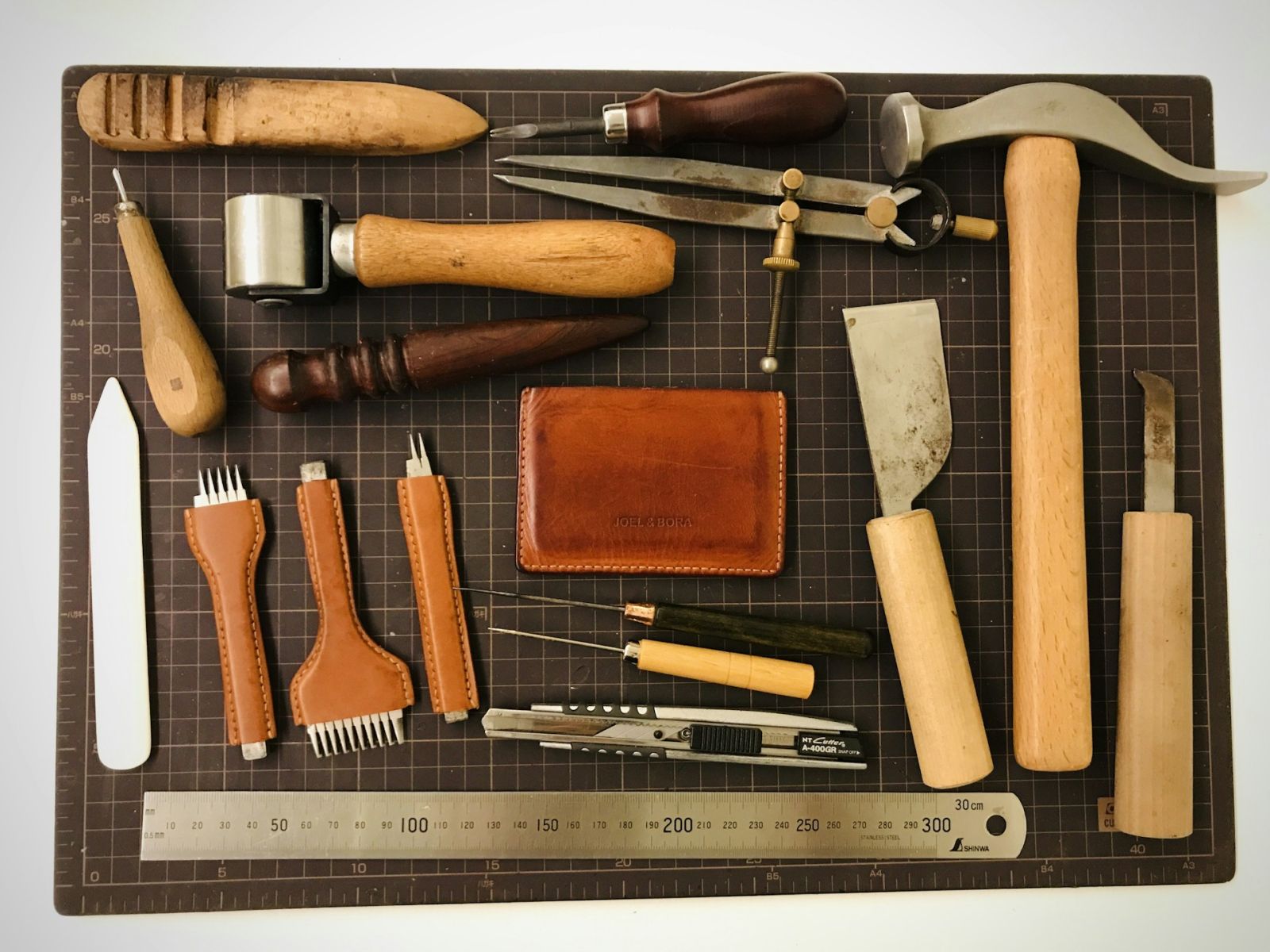
Quick answer
Buy a two-sided leather strop and a bar of green chromium-oxide compound (~0.5 micron) — that combination maintains every blade you own with 8–10 light passes per side, edge trailing. Add wet/dry sandpaper (1000 → 2000 → 3000 grit) stuck to glass for actual sharpening when an edge is damaged. Strop before every session; sharpen only when stropping stops helping.
Leather tools dull in a specific, fixable way: the fine edge rolls and loses polish long before real metal is gone. Stropping — dragging the blade backwards over compound-charged leather — realigns and re-polishes that edge in seconds. That is why experienced makers strop constantly and sharpen rarely, and why every cutting problem a beginner blames on cheap tools is usually a stropping problem.
This kit covers your skiving knife, cutting knives, awls, edge bevelers and even punch tubes.
The core kit: strop + green compound
A strop is just firm leather glued to a paddle — flesh side up for compound, grain side for finishing. The compound does the cutting: green chromium oxide runs about 0.5 micron, fine enough to polish an edge to a mirror. Crayon it on like a candle, warm it slightly if it skips, and refresh when the surface goes black-glossy. White rouge is the common all-purpose alternative.
Technique in one sentence: lay the bevel flat, pull spine-first (edge trailing), light pressure, 8–10 passes per side.
The only stropping rule that matters
Edge-trailing strokes only — push the edge forward and you cut the strop and roll the blade.
When stropping is not enough: the grit ladder
When a blade drags after stropping, tears instead of cuts, or has visible nicks, it needs abrasive. The budget route (“scary sharp”) is wet/dry sandpaper on glass or tile:
| Stage | Grit | When |
|---|---|---|
| Repair | 400–800 | Nicks and chips only |
| Set the edge | 1000–2000 | Blade drags after stropping |
| Polish | 3000–8000 | Refine before the strop |
| Maintain | Strop + green compound | Before every session |
Skiving knives and single bevels
Japanese-style skiving knives are ground single-bevel at a low angle — sources put the working range around 15–25°. The rule: keep the factory angle, keep it consistent, and flatten the back before you ever touch the bevel. Lower angles slice more easily but chip more readily, which is why chasing an extreme edge on a beginner blade backfires. Our step-by-step sharpening guide walks the full routine.
The odd shapes: bevelers and punches
- Edge bevelers: coat a length of waxed thread with compound and pull the beveler’s groove along it (always pull), or wrap fine paper (1500 → 3000) around a matching dowel. Routine: 5–10 strops per session.
- Round punches: fine sandpaper around a pencil for the inside; polish the outside bevel on the strop.
- Awls: polish all four faces of the diamond blade to a mirror — a rough awl tears holes open.
Sharpening gear worth owning
A strop kit plus a sandpaper set covers everything a beginner cuts with.
-
Leather Strop (two-sided) + Green Compound
- Size
- ~3x8 in paddle
- Level
- Beginner
The single best upgrade for every blade you own. Charge with the included chromium-oxide bar and strop before each session.
Reviewed 2026-07-20 -
Chromium Oxide Stropping Compound (0.5 micron)
- Size
- green bar
- Level
- Beginner
The standard green honing compound (~0.5 micron). Crayon it onto any leather scrap to make a strop for knives, awls and bevelers.
Reviewed 2026-07-20 -
Wet/Dry Sandpaper Set (1000-3000 grit)
- Size
- 1000/1500/2000/3000
- Level
- Beginner
Stick to glass or a tile for a dead-flat budget sharpening station. Work up the grits, then finish on the strop.
Reviewed 2026-07-20
Key takeaways
- Strop with green ~0.5 micron compound before every session.
- Edge-trailing strokes only, 8–10 light passes per side.
- Sharpen on a 1000 → 3000 grit ladder only when stropping stops working.
- Bevelers strop on compound-coated thread; punches on a dowel.
This guide sits in a loop of hands-on leathercraft lessons — move forward to leather thickness converter (oz ↔ mm) or revisit how to sharpen & strop leather tools first.
Frequently asked questions
What is the green compound for strops?
Chromium oxide, an abrasive of roughly 0.5 micron. It is fine enough to polish a cutting edge to a mirror, which is exactly what leather blades need to slice cleanly.
How often should I strop leather tools?
Before every session, and every 30–60 minutes during heavy cutting or beveling. Ten seconds of stropping delays a full sharpening by months.
Which direction do I strop?
Always edge-trailing: the spine leads and you pull away from the cutting edge. Pushing edge-first slices the strop and rolls the edge you just polished.
Do I need whetstones for leathercraft?
Not to start. Wet/dry sandpaper on glass covers repairs and re-grinding for a few dollars. Stones earn their place once you maintain many blades or a prized round knife.
What angle do I sharpen a skiving knife?
Keep the factory bevel — most Japanese-style skiving knives run somewhere around 15–25°. Consistency matters more than the exact number; wobbling the angle rounds the edge.